2026-10-10 ·
Temporary Roof Leak Fixes: Tarping & What NOT to Do
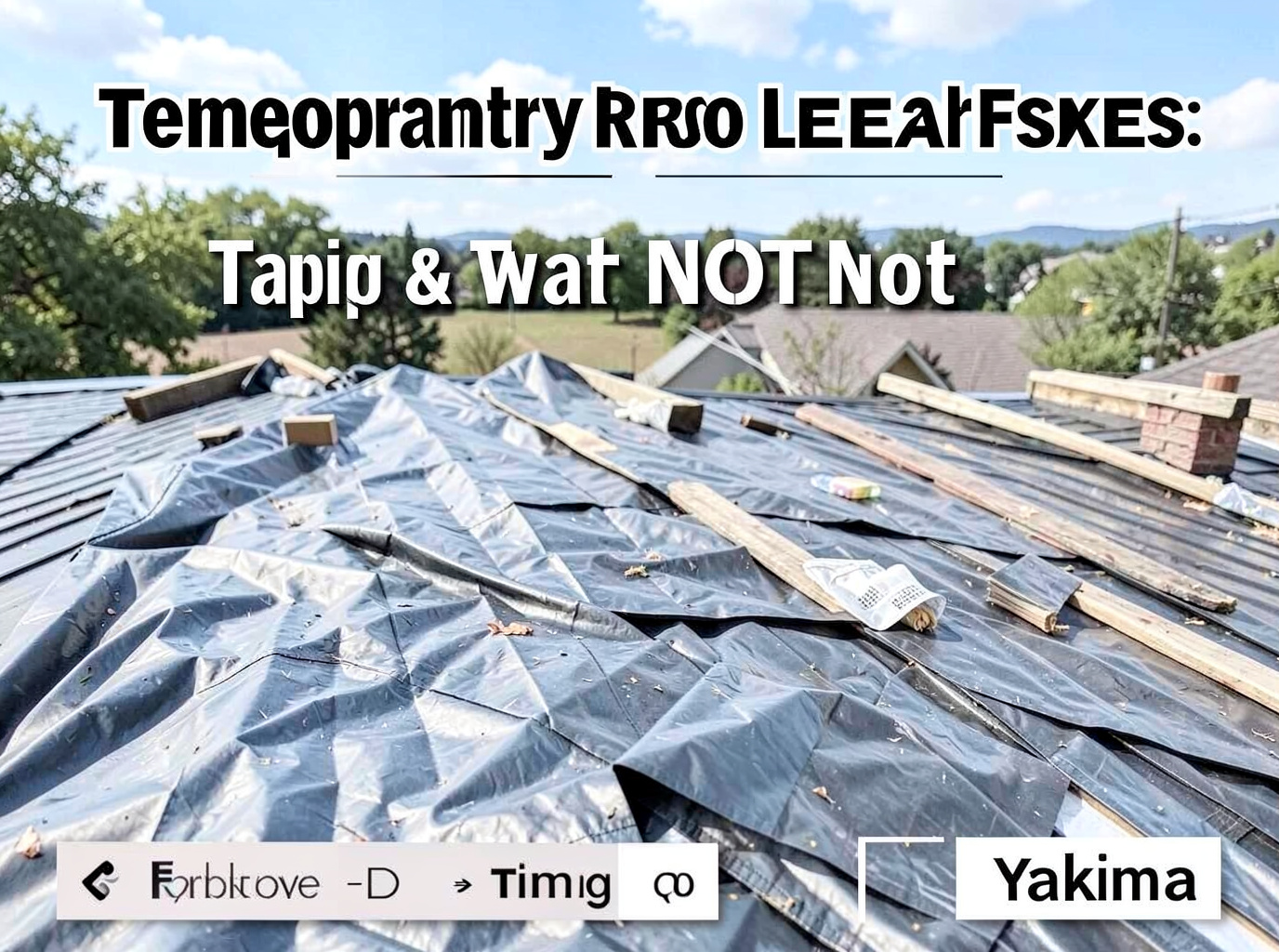
A properly installed tarp can shield your home from additional water intrusion for 2–4 weeks in Yakima County when winter temperatures drop and wind gusts pick up along the Yakima River. The key is matching tarp size to the damaged section, using furring strips to create a watertight seal at the top edge, and anchoring every corner against the gusts common in West Valley and Terrace Heights. Skip these steps and water finds new paths under the tarp within days.
Preparing Your Roof for Temporary Tarping
Before any tarp goes up, walk the roof from a ladder only and note the exact leak location relative to vents, valleys, or skylights. In older neighborhoods like Downtown Yakima and East Yakima, many homes still carry original asphalt shingles installed 15–25 years ago; these surfaces are often brittle after repeated freeze-thaw cycles. Clear loose debris and mark the perimeter with chalk so the tarp extends at least 4 feet past the leak on all sides. Check attic insulation and ceiling drywall for existing saturation so you know which interior areas need immediate protection with plastic sheeting. Measure twice because a tarp that is even one foot short on the uphill side will channel water straight into the house during the next cold front moving through Selah or Union Gap.
How to Install a Tarp Correctly
Start at the ridge and roll the tarp downhill so the top edge sits 2–3 feet above the leak. Slide 1x4 furring strips under that top edge and screw them into rafters every 16 inches; this creates the critical uphill seal that prevents wind-driven rain from slipping underneath. Run additional strips horizontally every 4 feet down the slope and secure the bottom edge with sandbags or additional strips rather than nails alone. In Sunnyside or areas near the Yakima River where sudden gusts are common, add diagonal straps tied to secure fascia points. Leave the sides loose enough for drainage but tight enough that the tarp does not flap and tear. This method has kept water out of Yakima homes through multiple winter storms when done before temperatures fall below freezing.
Mistakes That Make Leaks Worse
Homeowners often staple a tarp directly to shingles without furring strips, creating hundreds of new puncture points that leak once the tarp shifts. Others use undersized tarps that stop short of the ridge, allowing water to run behind the material during the heavy spring rains that follow Yakima’s dry summers. Climbing onto icy roofs in Terrace Heights or West Valley to adjust a loose tarp is another frequent error that leads to falls or further shingle damage. Never seal tarp edges with duct tape or roofing cement alone; both fail within days when daytime highs reach the 90s and then drop sharply at night. These shortcuts turn a temporary measure into an expensive interior repair job.
Local Weather Factors in Yakima County
Hot, dry summers bake shingles and create hairline cracks that open wider once cold weather returns. When winter arrives, even modest snow loads on older roofs in Selah or Union Gap can force water under damaged flashing. High winds that accompany regional wildfire events can lift poorly anchored tarps in a single afternoon. Ice dams along the north-facing slopes common in the valley also push water sideways under shingles, so any tarp must cover the entire affected course, not just the visible drip. Checking the forecast for the next 10-day stretch before installing helps you decide whether a single tarp will hold or whether multiple overlapping sheets are required.
Knowing When Tarping Is Not Enough
If water is already staining ceilings in multiple rooms or if the leak follows a valley or step flashing, tarping alone will not stop interior damage. In those cases the roof needs immediate assessment rather than another layer of plastic. Homes in Fruitvale or South Broadway built before 1980 often have multiple layers of shingles that hide the true extent of rot once water gets behind the tarp. Monitor the attic daily for new moisture; any increase means the temporary fix has reached its limit. At that point professional inspection becomes the only reliable next step before drywall and insulation require replacement.