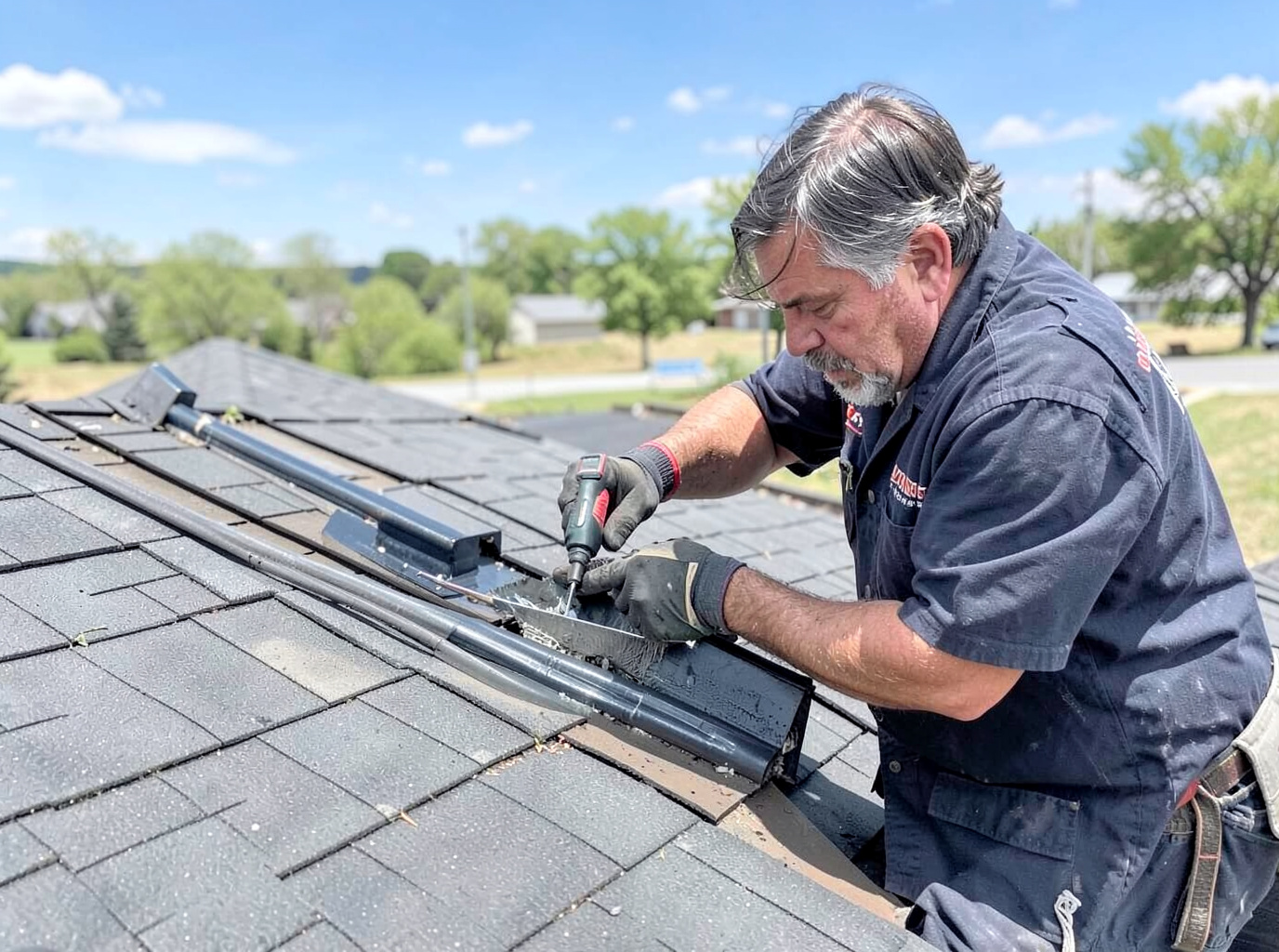
Yakima homes built before the 1980s in neighborhoods like Downtown Yakima and Terrace Heights often have original vent boots made of lead or early rubber that crack when temperatures swing from 100-plus degrees in summer to below freezing in winter. The Yakima River corridor adds humidity that accelerates corrosion around pipe penetrations on asphalt and metal roofs common throughout Yakima County. Technicians inspect the flashing collar, the seal under the boot, and the decking for rot before any replacement because a failed boot frequently hides water that has already reached the sheathing.
Hot dry summers bake the rubber boots until they lose flexibility, while cold winters cause contraction that pulls the seal away from the pipe. In West Valley and East Yakima, wind-driven rain funnels under lifted edges on south-facing slopes. Proper repair requires removing the old boot without damaging the surrounding shingles, installing a new high-temperature EPDM or silicone boot, and re-sealing with compatible flashing cement rated for the valley's UV exposure. Skipping the underlayment step leaves the repair vulnerable the next time temperatures drop below 20 degrees.
Homeowners in Selah and Sunnyside sometimes confuse vent leaks with ridge vent issues, but pipe boots fail independently when the original mastic dries out. Code in Yakima County requires new boots to extend at least four inches up the pipe and be fastened with ring-shank nails rather than staples. Work is completed during business hours of Monday through Friday 8am to 6pm or Saturday 9am to 2pm so residents can schedule around the heat of the day.
Technician insight
In Yakima the thing that catches most people out with Roof Vent & Pipe Boot Repair is the way winter freeze-thaw cycles along the Yakima River corridor pull the boot away from the pipe even when the rubber still looks intact from the street; older homes in Terrace Heights and Selah often have lead flashing that cracks first, and homeowners wait until water shows on the ceiling instead of checking the attic after the first cold snap.
West Valley Vent Leak After Winter Freeze
A homeowner in West Valley noticed ceiling stains after a January thaw. Inspection revealed three cracked pipe boots on a south-facing slope where summer heat had hardened the rubber. The crew replaced the boots with high-temperature silicone versions and added new step flashing around each penetration. No further leaks appeared during the remaining winter storms.
Roof Vent & Pipe Boot Repair Services We Offer
✓Pipe Boot Replacement
Remove cracked or hardened boots around plumbing vents and install new EPDM or silicone boots sealed to the existing flashing for long-term leak prevention in Yakima homes.
✓Roof Vent Flashing Repair
Re-seal or replace damaged flashing collars around bathroom and kitchen exhaust vents to stop water entry during Yakima Valley wind-driven rain events.
✓Emergency Vent Leak Sealing
Provide same-day temporary and permanent sealing of active vent leaks reported from neighborhoods like Terrace Heights and West Valley before water reaches ceilings.
✓Exhaust Vent Boot Upgrade
Replace standard rubber boots with high-temperature silicone versions on dryer and furnace vents that see repeated expansion from Yakima's hot summer days.
✓Skylight Curb Boot Repair
Address leaking boots and flashing at skylight curbs common on 1970s and 1980s homes throughout East Yakima and Selah.
Roof Vent & Pipe Boot Repair Cost in Yakima, WA
| Service | Typical Range | What Affects It |
|---|---|---|
| Single Pipe Boot Replacement | $175–$325 | Price rises with steep pitch or difficult attic access common in older Downtown Yakima homes. |
| Multiple Vent Boot Repair | $450–$850 | Covers three to five vents; common on 1970s West Valley houses. |
| Emergency Same-Day Service | $250–$450 | Includes temporary tarping plus permanent repair during business hours. |
| Flashing and Underlayment Refresh | $125–$275 | Added when rot is found around the penetration. |
Ranges are typical for Yakima, WA and confirmed with an exact written quote before any work starts.
How it works
- 1
On-Site Assessment
Inspect all roof penetrations from the attic and exterior, noting boot condition, decking moisture, and any rot around vents in the specific neighborhood.
- 2
Material Selection
Choose EPDM, silicone, or lead replacement boots rated for Yakima Valley UV and freeze-thaw exposure based on roof type and vent temperature.
- 3
Boot Removal and Deck Prep
Carefully lift surrounding shingles, remove the old boot, and replace any damaged underlayment or sheathing before installing the new seal.
- 4
Installation and Final Seal
Secure the new boot with proper flashing cement and ring-shank fasteners, then test the seal from the attic before cleanup.
Pricing
Upfront quotes after inspection; final price depends on roof access, number of vents, and any decking repairs needed.